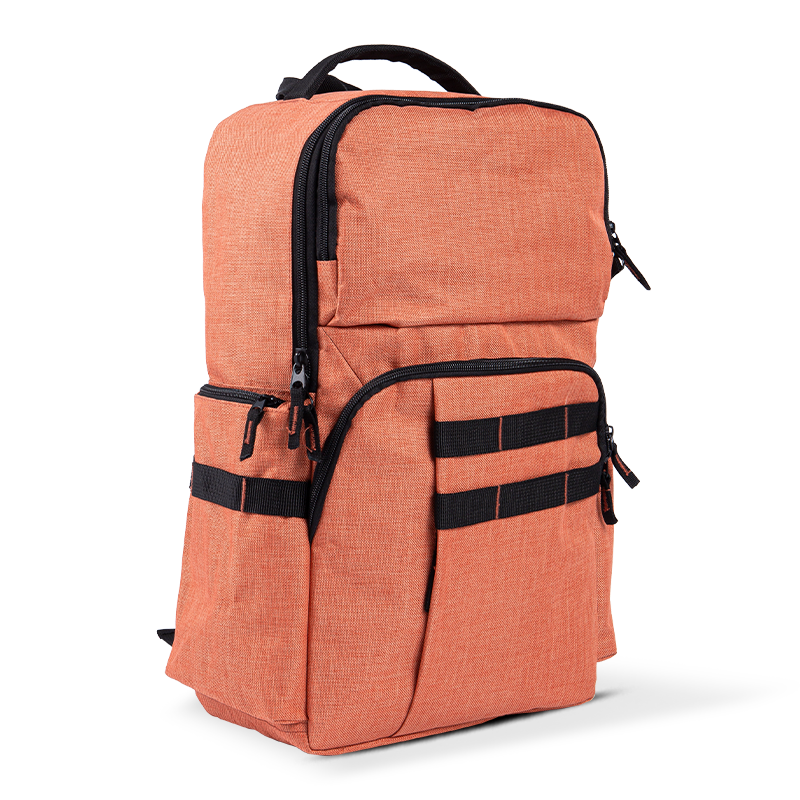









A torn handle on a Monday morning commute is a $40 mistake you won't make twice. Most people don't — they switch to polyester, and they don't look back. Polyester handbags now account for a dominant share of the global everyday bag market, and the reasons go well beyond price. This guide covers the material science, the buying criteria, and the care habits that separate a bag that lasts 18 months from one that lasts five years.
Why Polyester Performs So Well as a Bag Material
Polyester is a synthetic fiber made from polyethylene terephthalate (PET). Its tightly woven structure resists stretching, tearing, and shrinking under load — the exact stresses a commuter bag faces daily. In independent abrasion tests, treated polyester fabrics endure over 10,000 rub cycles before showing meaningful wear. For reference, most natural fiber bags fail that same test well before 3,000 cycles.
The other major advantage is water resistance. High-quality treated polyester repels moisture with an absorption rate under 5%, meaning a sudden downpour doesn't translate into a soaked laptop. This performance holds through repeated washing, which most natural materials can't claim. Surveys of everyday users put minimal-wear rates at 80% after one full year of regular use — a figure that reflects both the fiber strength and the ease of maintenance.
Compared to canvas, polyester is lighter and dries faster. Compared to PU leather, it holds color better under UV exposure and doesn't crack in cold weather. It occupies a practical middle ground that makes it the go-to choice for daily carry.
What to Actually Look for When Buying
Not all polyester handbags are made equal. The fabric's weight, measured in denier (D), is the first number worth checking. A 600D polyester offers a solid balance of durability and flexibility for everyday use. Higher-denier fabrics like 1680D Ballistic Nylon — used in performance travel bags — are significantly more tear-resistant but heavier. For a commuter shoulder bag or tote, 600D to 900D is the sweet spot.
Beyond the fabric, pay attention to four construction details that determine real-world longevity:
- Stitching density: Double-stitched seams at stress points (handle bases, zipper surrounds, side panels) resist splitting under load. Single-thread stitching is the first thing to unravel.
- Hardware quality: Brass or nickel-alloy zippers glide smoothly and don't corrode. Plastic sliders feel cheaper because they are — they crack under cold and UV exposure.
- Internal organization: A well-structured interior with dedicated pockets for phones, cards, and documents prevents items from shifting and reduces bag wear from the inside out.
- Water-repellent coating: Not all polyester is treated. Look for bags that explicitly state a DWR (Durable Water Repellent) finish or a waterproof rating — Oxford fabric versions, for instance, can reach up to 5000mm hydrostatic head ratings.
Huacheng's large-capacity commuter shoulder tote checks these boxes with a water-repellent polyester shell, skin-friendly lining, and multiple internal compartments designed for daily commuter use. Similarly, the casual sports single-shoulder messenger is built for active carry with a lightweight structure that distributes load across the shoulder without digging.
Denier vs. Price: What You're Actually Paying For
| Denier | Feel & Weight | Best For | Expected Lifespan* |
|---|---|---|---|
| 300D–500D | Soft, lightweight | Casual totes, promotional bags | 1–2 years |
| 600D–900D | Firm, structured | Daily commuter bags, shoulder totes | 3–5 years |
| 1000D+ | Heavy, rigid | Travel bags, tactical packs | 5+ years |
*With regular use and basic care. Actual lifespan varies by frequency of use and maintenance habits.
How to Care for a Polyester Handbag to Maximize Lifespan
Polyester's biggest practical advantage is how little maintenance it demands. A well-made polyester bag can be machine washed on a gentle cycle (cold water, mesh laundry bag), air-dried flat, and it's ready to go again — no leather conditioner, no special storage protocols. That said, a few habits make a measurable difference:
- Empty and shake out the interior weekly. Debris and crumbs trapped inside accelerate lining wear, especially around zipper tracks.
- Spot-clean promptly. Polyester resists staining well, but letting oil-based stains sit beyond 24 hours bonds them to the fiber. A damp microfiber cloth handles most marks immediately.
- Avoid prolonged direct sunlight when stored. While polyester holds color far better than canvas, extended UV exposure will fade dark colors over time. Store in a dust bag or cupboard when not in use.
- Re-apply DWR spray annually. Water-repellent coatings wear down with washing. A spray-on DWR product (widely available) restores the bead-off performance in minutes.
- Don't overload. A bag stressed beyond its design capacity will fail at the strap attachment points first — not the fabric itself. Respect the capacity the stitching was built for.
Who Should Buy a Polyester Handbag
The honest answer: most people. Leather is the right call when you're investing in a formal piece that you'll carry for a decade and condition twice a year. Canvas works well for light casual use. But for the daily realities of commuting, errands, travel, and everything in between, polyester delivers the best combination of durability, weight, weather resistance, and low maintenance cost.
It's also the practical choice for wholesale and branded applications. Huacheng — a manufacturer established in 1999 with over 25 years in the bag industry — produces more than 3 million bags annually from its 40,000 sqm production facility. Their OEM and ODM capabilities cover custom logo application (embroidery, silk printing, debossing), Pantone color matching, and size modification, with standard MOQs starting at 200 pieces. All products comply with ISO 9001, OEKO-TEX, REACH, and BSCI standards — relevant certifications for international buyers who need documented quality assurance.
If you're sourcing for retail, corporate gifting, or building a private label line, the full range of tote bag styles including polyester, canvas, and PU leather options offers genuine variety across price points and use cases.
The Bottom Line on Buying Polyester Handbags
A good polyester handbag — one built with 600D+ fabric, reinforced seams, quality hardware, and a water-repellent finish — will outlast most leather alternatives in active daily use. The key is knowing what to check before you buy: denier, stitching, hardware, and coating. With those four criteria covered, you're buying something that handles commutes, weather, and years of use without demanding much back.
For ready-to-source or customizable options, Huacheng's polyester handbags offer factory-direct quality with full OEM support — a solid starting point whether you're sourcing one style or building an entire product line.